
Intelligent, Accessible, Member-Centered Support
Role: Lead Product Designer | Tools: Figma, Mural | Team: 1 UX Designer, 1 DX Manager, 2 Product Owners
2 UX Architects, 2 UI Developers, 2 Business Analysts,1 Data Scientist | Year: 2025
2 UX Architects, 2 UI Developers, 2 Business Analysts,1 Data Scientist | Year: 2025
Problem Statement
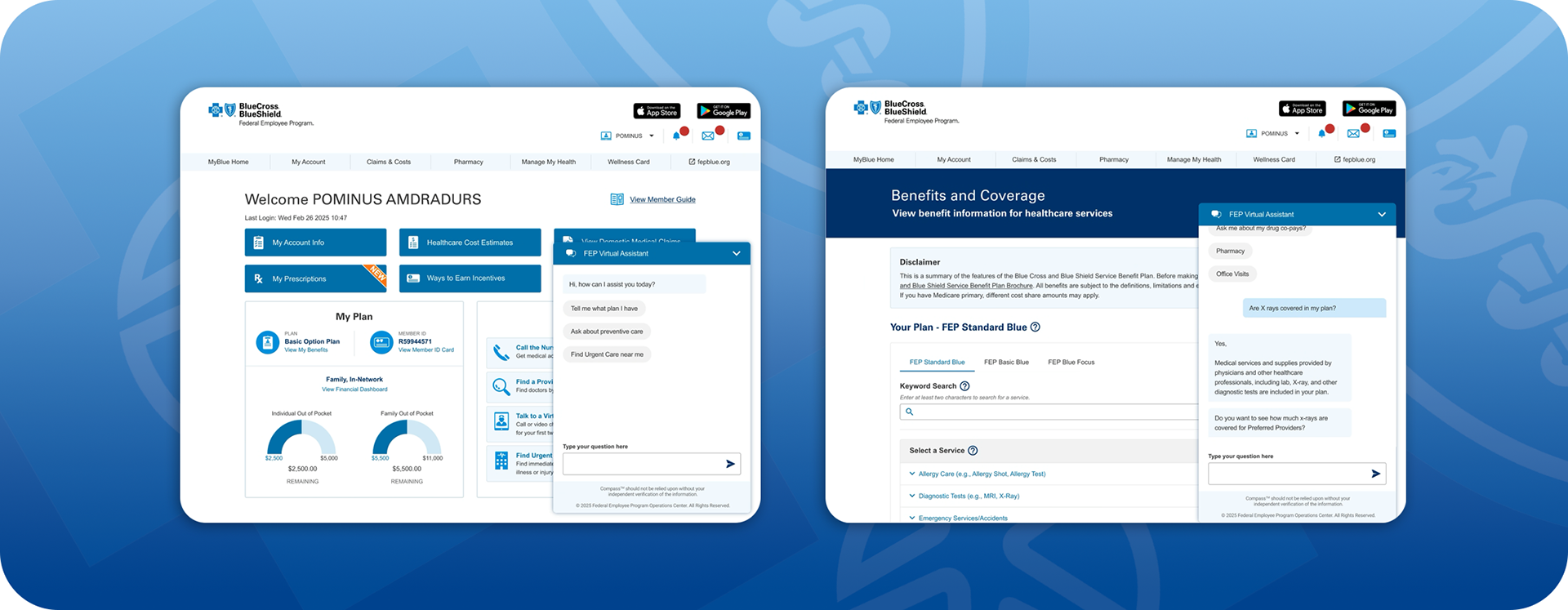
MyBlue members often struggled to find clear, actionable information within the member portal, leading to high support call volumes and inconsistent experiences across digital touchpoints. Existing search and FAQ tools lacked the intelligence and traceability needed to guide members through complex healthcare tasks.
As the UX Lead, I was responsible for defining a unified experience vision for an AI-powered virtual assistant that could deliver accurate, context-aware answers at scale. This required aligning multiple stakeholder groups—engineering, content strategy, data science, compliance, and product owners—while creating a design approach that balanced AI capabilities with member safety, clarity, and accessibility. The challenge was not only to design an intuitive conversational interaction model, but also to modernize the underlying information architecture, ensure response traceability, and establish UX standards that teams could adopt across future AI-driven features.
My Role and Approach
As the UX Lead, I was responsible for:
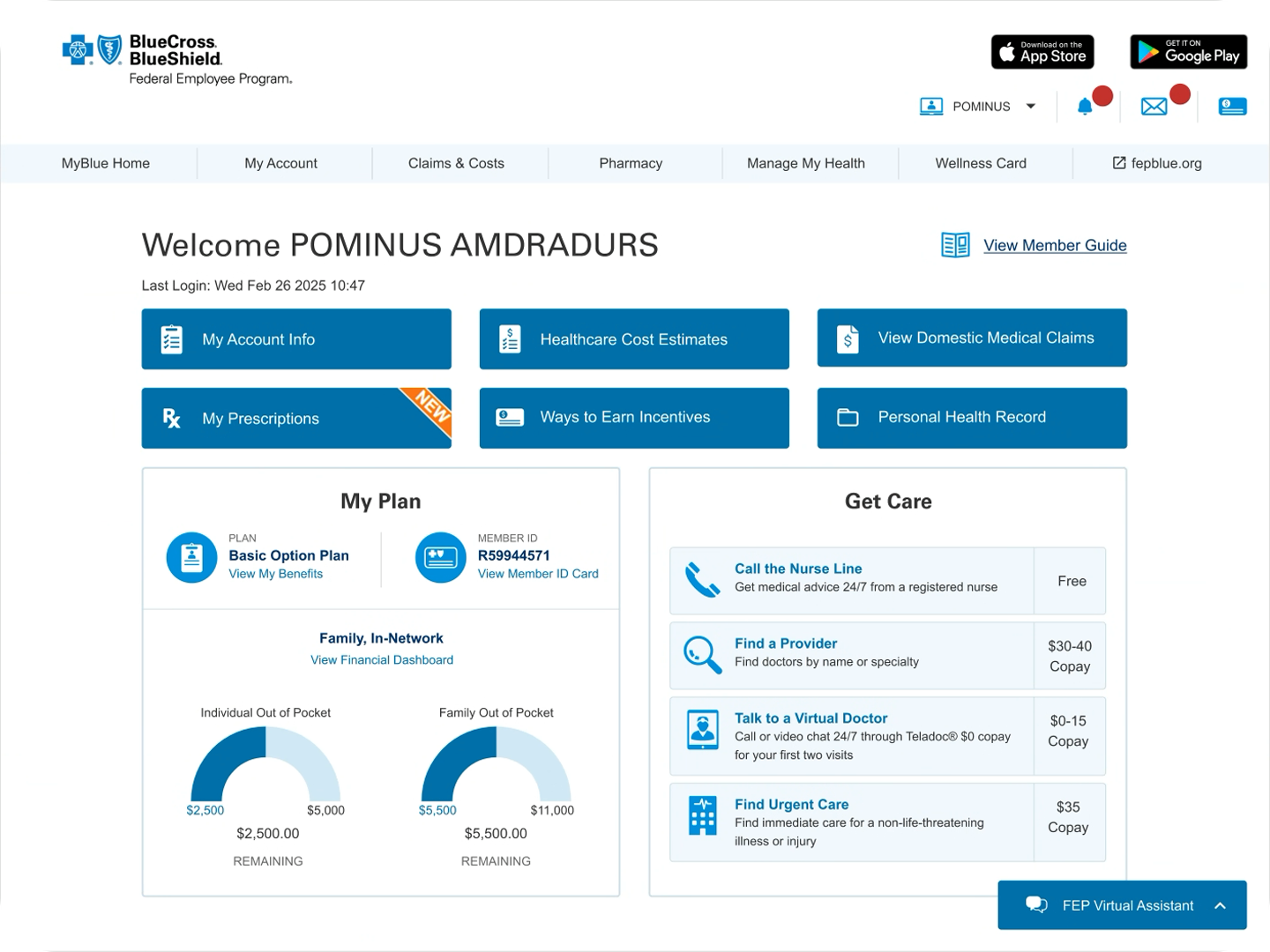
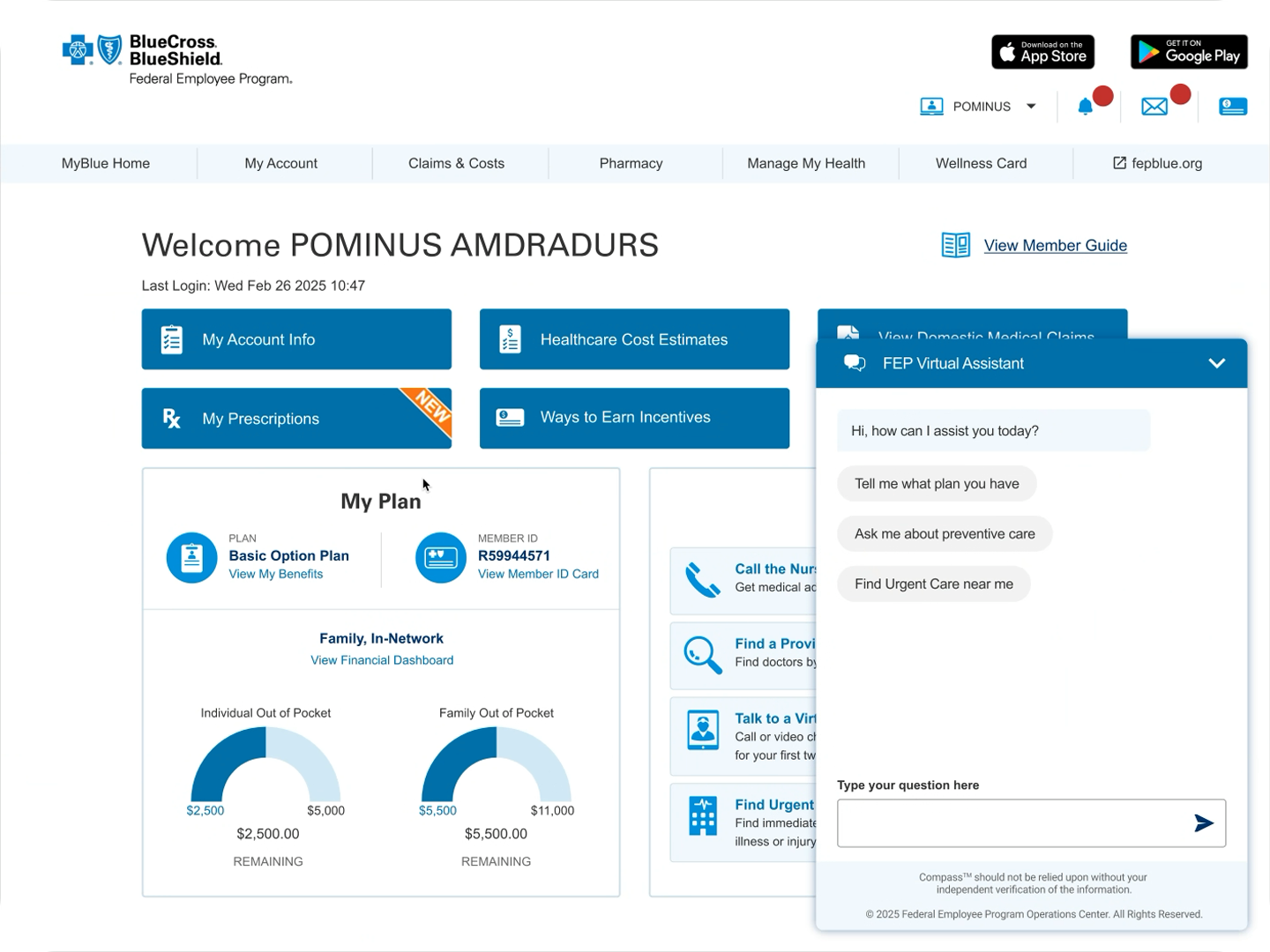
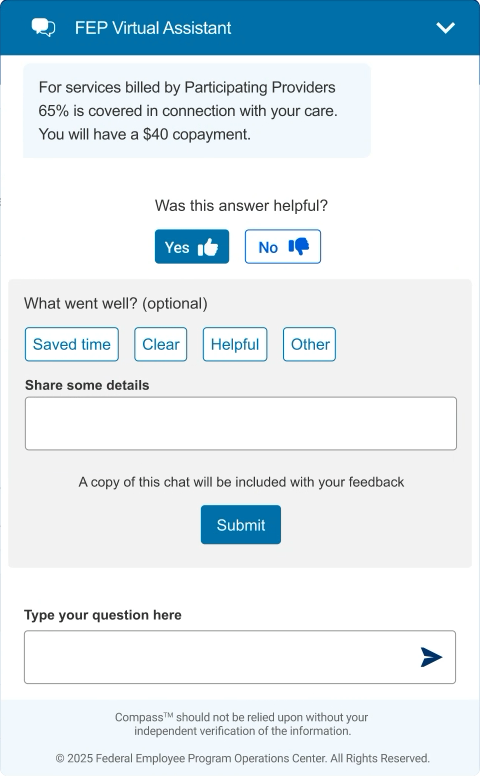
Defining the experience strategy and interaction model for an AI-driven virtual assistant that delivered clear, context-aware answers.
Unifying engineering, content strategy, data science, and compliance teams around a shared understanding of user goals, technical constraints, and safety requirements.
Modernizing the information architecture and aligning chatbot responses with source-of-truth systems to ensure accuracy and traceability.
Creating scalable design patterns, conversation flows, and components that integrated seamlessly with the MyBlue Design System.
Ensuring the experience supported accessibility, health literacy, and the needs of diverse member populations.
Action
To deliver a cohesive, compliant member experience, I:
Led workshops with product, engineering, and data science teams to define user intents, conversational boundaries, and AI governance rules.
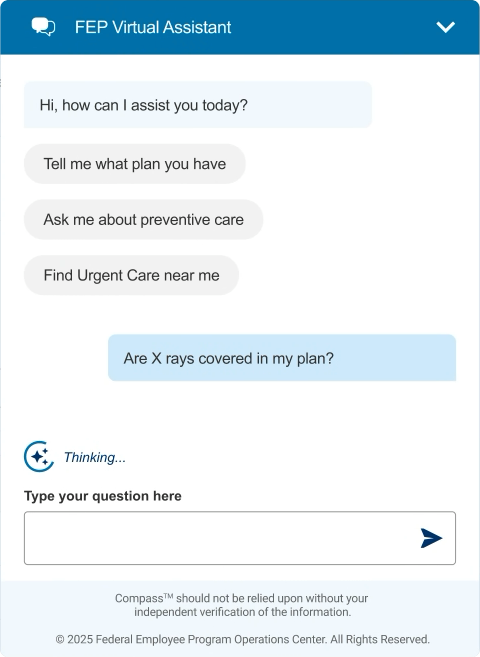
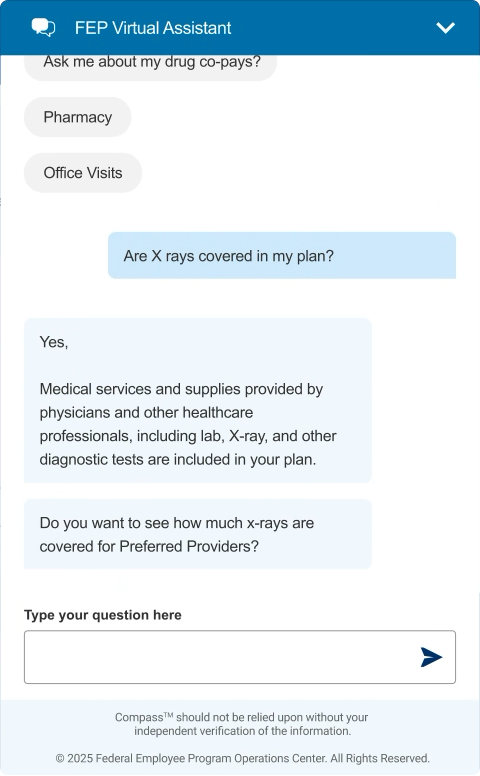
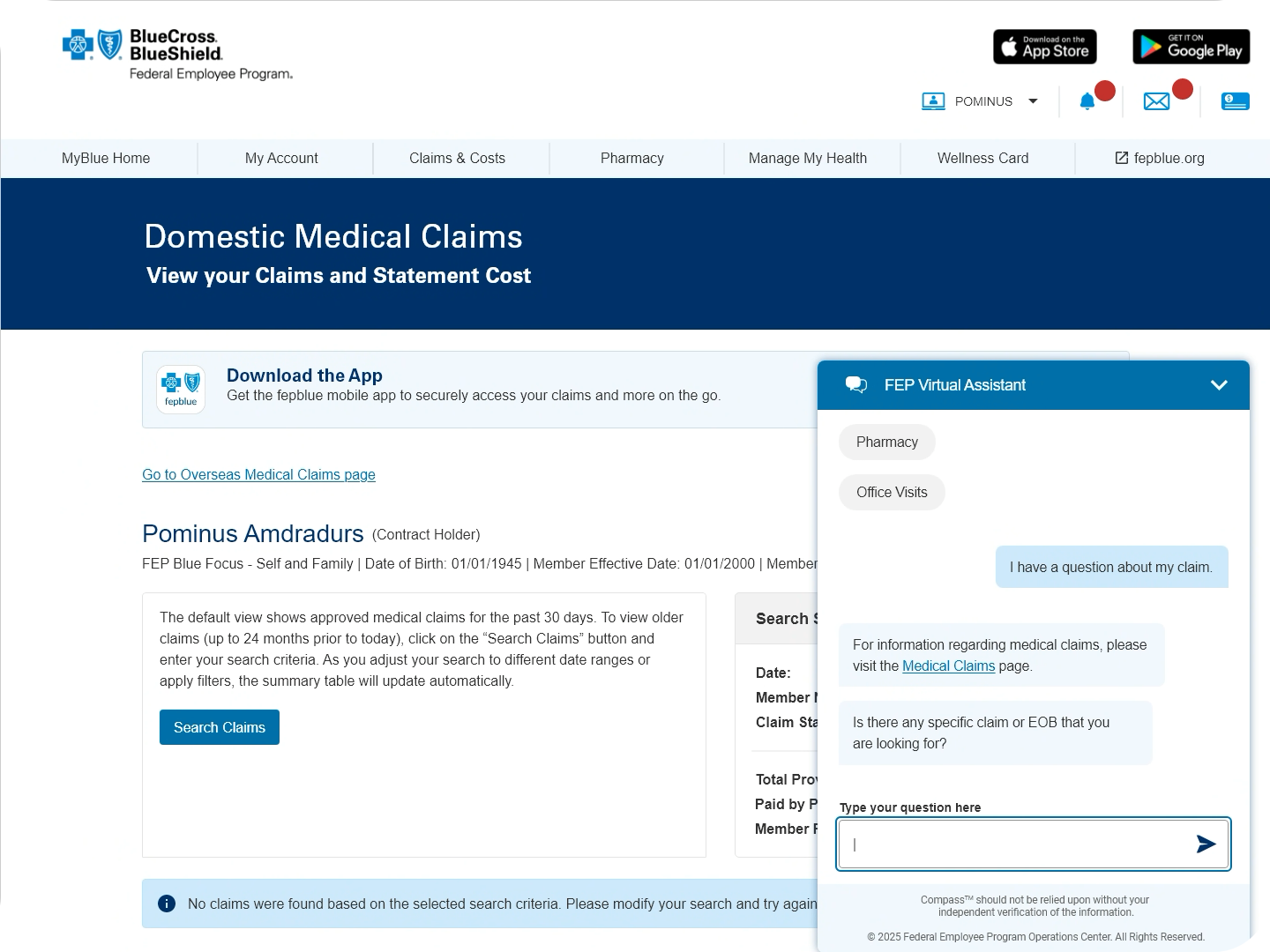
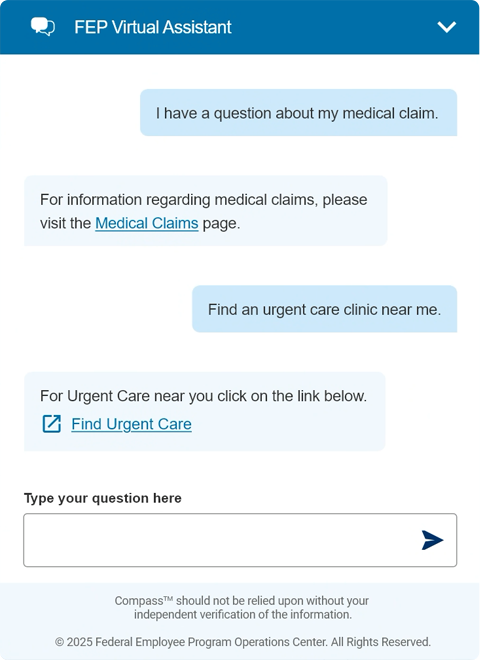
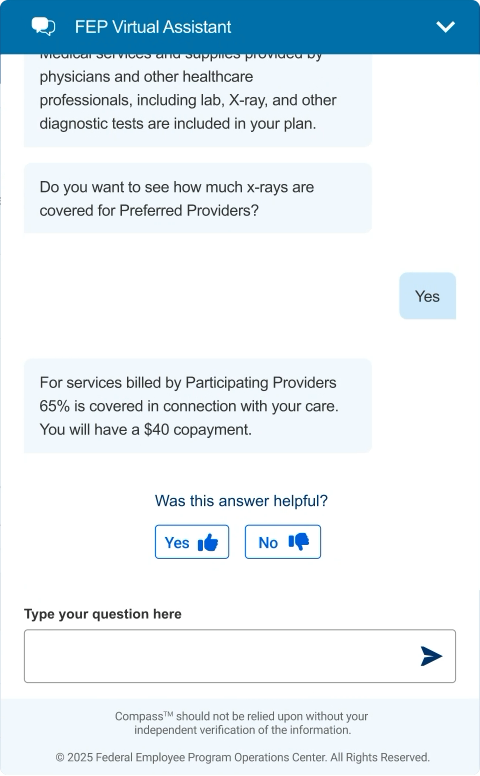
Mapped end-to-end conversational flows that guided members through benefits questions, claims inquiries, and coverage clarifications using plain-language UX writing and contextual safeguards.
Established response traceability by partnering with engineering to link chatbot outputs to specific backend knowledge sources—improving accuracy and enabling auditability.
Refined the information architecture, consolidating and restructuring fragmented content to reduce ambiguity in how answers were surfaced.
Created reusable patterns and components in Figma aligned to the MyBlue Design System, ensuring consistency across desktop, mobile web, and native app experiences.
Partnered with the accessibility and product teams to integrate safe-error states, escalation paths, and compliance-required disclaimers.
Conducted rapid usability testing to validate comprehension, interaction clarity, and error recovery across multiple user types.
Collaborated with engineering and data science on feasibility, ensuring the conversational logic, fallback rules, and structured data models aligned with platform constraints.
The Results
✅ The new MyBlue AI Virtual Assistant reduced reliance on traditional search tools and provided significantly faster access to key benefits information.
✅ Early testing showed higher task-completion rates and improved member confidence in finding answers independently.
✅ Response traceability improved cross-functional alignment and reduced discrepancies between digital content sources.
✅ The scalable design patterns accelerated the roadmap for additional AI-powered features, enabling future expansion into claims support, care navigation, and personalized recommendations.
✅ The work strengthened collaboration across UX, engineering, data science, and compliance—establishing a repeatable model for safe, human-centered AI in healthcare.
What I Learned
💡 Clear traceability is essential when designing AI in regulated environments.
💡 Conversational UX demands tight alignment between IA, content strategy, and technical architecture.
💡 Transparent collaboration with data science and compliance teams is critical to building trust in AI experiences.
Influence
Helped elevate the role of UX in enterprise AI initiatives.
Created shared design standards that product and engineering adopted for upcoming AI workflows.
Advocated for human-centered AI principles that shaped compliance, safety requirements, and training data conversations.
What to Remember
👉 AI should amplify human-centered design — not replace it. Success depends on creating clear, accessible, and trustworthy conversations that empower users to make informed decisions.